When it comes to designing a home in Dubai, the flooring you choose sets the foundation for your entire aesthetic. We often find ourselves drawn to the timeless warmth and character of natural wood. There’s simply nothing quite like it. However, the reality of our climate—with its intense sunlight, humidity, and the ever-present risk of sand and dust—means that traditional hardwood can be a challenging choice.
Enter Timber LVT. This innovative flooring solution has revolutionized the interior design landscape. It offers the stunning, authentic visual of hardwood while providing the rugged performance required by modern family life. Whether you are renovating a villa in the Springs or styling a new apartment in Downtown, understanding why Timber LVT might be your perfect match is the first step toward a successful project.
In this comprehensive guide, we will walk you through everything you need to know about luxury vinyl tile that looks like wood. We’ll explore what it is, why it outperforms real timber in specific environments, how to install it, and how to choose the perfect style for your home.
What Exactly is Timber LVT? (And Why It’s Not Your Grandma’s Vinyl)
When many people hear the word “vinyl,” they might picture the cheap, thin, sticky sheets of the past. Today’s Timber LVT (Luxury Vinyl Tile) is a high-tech, engineered flooring solution that mimics wood with astonishing accuracy.
The Anatomy of a Timber LVT Plank
To appreciate its value, it helps to understand what it’s made of. A high-quality LVT plank consists of multiple layers fused together:
- The Wear Layer: This is the clear, topmost layer that protects the design. Measured in mils or millimeters, this is your defense against scratches, stains, and fading. For high-traffic areas in Dubai homes, a thicker wear layer is recommended.
- The Design Layer: This is a high-definition photographic film that captures every detail of real wood—from the grain patterns to the knots and natural color variations.
- The Core Board: This is the heart of the plank. It provides stability and rigidity. In many modern planks, this is a Stone Plastic Composite (SPC) core, which makes the floor incredibly stable and completely waterproof.
- The Backing Layer: This bottom layer provides balance and can often include an attached underlayment for sound absorption and comfort.
Timber LVT vs. Real Hardwood: An Honest Comparison
Choosing between real wood and Timber LVT is a common dilemma. To help you decide, let’s look at how they stack up against the specific demands of a Dubai household.
| Feature | Timber LVT (Luxury Vinyl) | Real Hardwood |
|---|---|---|
| Water Resistance | 100% Waterproof. Ideal for kitchens, bathrooms, and entryways where spills or humidity are common. | Susceptible to Water Damage. Can warp, swell, or stain when exposed to moisture. |
| Durability | Highly Scratch & Dent Resistant. The tough wear layer protects against pet claws, high heels, and furniture. | Scratches and Dents Easily. Requires regular sanding and refinishing over its lifetime. |
| Comfort & Sound | Warmer and Softer Underfoot. Quieter to walk on, reducing echo in apartments and villas. | Can be cold and hard. Can amplify noise without thick rugs and underlayment. |
| Maintenance | Extremely Low Maintenance. Simple brushing and occasional damp mopping keep it looking new. Doesn’t require waxing or special cleaners. | High maintenance. Needs sweeping, vacuuming, and periodic professional refinishing. |
| Aesthetics | Hyper-Realistic Replication. Modern printing technology captures wood grain perfectly, offering consistent color. | Authentic & Unique. Every plank is one-of-a-kind, with natural aging that adds character over time. |
| Climate Suitability (UAE) | Excellent. Resists fading from sunlight and does not expand/contract dramatically with humidity changes. | Moderate to Poor. Can warp in humidity and fade quickly in direct sunlight. |
The Unbeatable Benefits of Choosing Timber LVT for Your Dubai Home
Beyond the comparison with wood, Timber LVT offers a host of practical benefits that align perfectly with the lifestyle of the region.
1. Complete Peace of Mind in Every Room
Because it is 100% waterproof, you can run a single flooring style seamlessly from your living room, through the kitchen, and into the guest bathroom. There is no need for awkward transition strips. Spills from a glass of water or a splash from the sink won’t cause panic—just a quick wipe.
2. Built for Family Life (and Entertaining)
Dubai is a city that loves to host. Whether it’s a lively gathering with friends or a quiet evening with the kids, your floors need to handle the traffic. Timber LVT is designed to resist the scuffs and scratches that come with moving furniture and foot traffic. Furthermore, it’s hypoallergenic; unlike carpet, it doesn’t trap dust, pollen, or sand, contributing to better indoor air quality.
3. Compatibility with Underfloor Heating
Many luxury villas and modern apartments now feature underfloor heating. Unlike solid wood, which can act as an insulator and crack under temperature changes, Timber LVT is an excellent conductor of heat. It allows the warmth to transfer efficiently to the surface, creating a cozy atmosphere during the cooler winter months.
4. Eco-Friendly and Sustainable Options
If you are environmentally conscious, many LVT products are now phthalate-free and manufactured using sustainable processes. They are often certified with low volatile organic compound (VOC) emissions, which means they are safer for your family and the planet.
Installation Insights: Glue-Down vs. Click-Lock
How your Timber LVT is installed can be just as important as the product itself. There are two primary methods, and the right choice depends on your subfloor and project type.
Glue-Down LVT: The Permanent Solution
Glue-down LVT is exactly what it sounds like: each plank is adhered directly to the subfloor using a high-strength adhesive.
- Best For: High-traffic commercial areas or large, open-plan homes where maximum stability is required.
- Pros: It feels incredibly solid underfoot and is usually thinner, making transitions to other floors (like tiles) easier.
- Cons: The installation is permanent and requires professional expertise. The subfloor must be perfectly smooth and level.
Click-Lock LVT: The DIY-Friendly Floating Floor
This type features planks that click together like a puzzle, “floating” over the subfloor with or without an underlayment.
- Best For: Apartments and rental properties, or for homeowners who want a faster, cleaner installation.
- Pros: It can be installed over existing tiles (saving on demolition costs) and is easier to replace if a plank gets damaged.
- Cons: It can feel slightly more hollow underfoot, and the planks are generally thicker, which may cause issues with door clearances.
Expert Tip from Interior Design-Dubai: In a recent retrofit project for a client in The Palm Jumeirah, we opted for a click-lock Timber LVT over their existing ceramic tiles. This saved them the mess and expense of demolition while giving them the instant warmth and luxury they desired.
The Critical Role of Subfloor Preparation
Regardless of the installation method, the golden rule of LVT installation is this: The quality of the finished floor is 100% dependent on the quality of the subfloor. Timber LVT is flexible, meaning any imperfection in the floor below will “telegraph” through and become visible on your new floor.
Preparing Different Subfloor Types
- Concrete Subfloors: These are common in Dubai apartments. They must be checked for moisture levels. A damp-proof membrane (DPM) or specific primers and smoothing compounds must be applied to ensure the slab is perfectly flat and dry. High spots need to be ground down, and low spots need to be filled.
- Existing Timber Subfloors: If you are laying LVT over old wooden floorboards, it is essential to cover them with a layer of 5.5mm or 6mm plywood. This creates a smooth, rigid surface and prevents the imprint of the floorboards from showing through the LVT over time.
- Existing Tiles: If the tiles are well-adhered, level, and grout lines are minimal, you can often install click-lock LVT directly over them. For glue-down, the tiles must be thoroughly degreased and primed to ensure the new adhesive bonds properly.
Design Ideas: Styling Timber LVT in Your Space
One of the greatest strengths of Timber LVT is its versatility. You can achieve virtually any look.
1. The Light and Airy Scandinavian Vibe
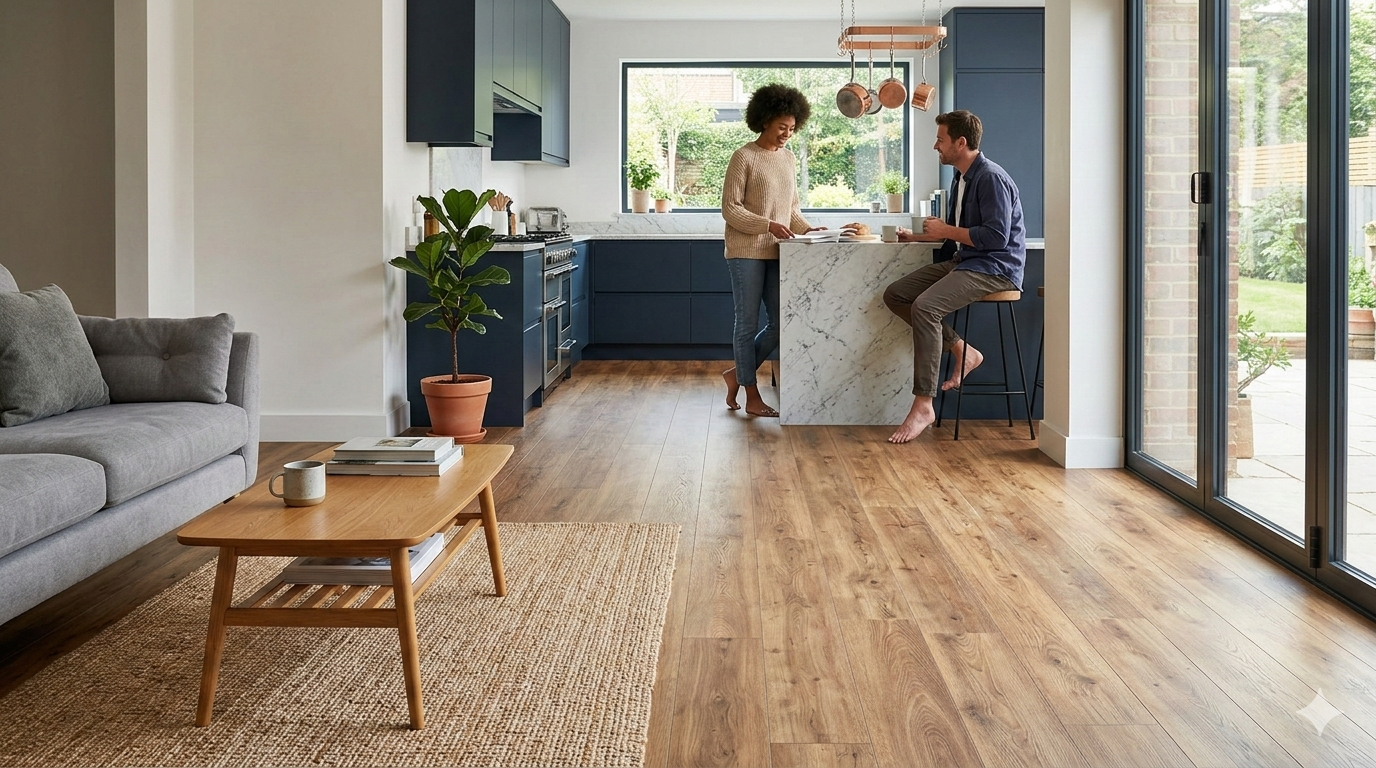
Choose LVT planks in pale whites, light greys, or blonde oaks. These colors reflect light, making smaller apartments feel larger and more open. Pair this with white walls, minimalist furniture, and touches of greenery for a fresh, modern look.
2. The Rustic French Farmhouse
For those who love character, opt for planks with a textured finish and “hand-scraped” look. Warmer tones like honey oak or chestnut, laid in a random pattern, bring a sense of history and charm to a villa, creating a cozy, welcoming atmosphere.
3. The Sleek and Modern Industrial Style
Wider planks in charcoal, weathered grey, or rich browns can mimic the look of reclaimed industrial wood. This style works beautifully in lofts or modern Dubai apartments, especially when paired with exposed concrete walls or metal accents.
4. Herringbone and Chevron Patterns
While many LVT planks are designed for straight-lay installations, many collections now offer shorter planks specifically designed for herringbone patterns. This classic layout adds an instant layer of luxury and visual interest to formal dining rooms and entryways.
Frequently Asked Questions About Timber LVT
1. Is Timber LVT suitable for Dubai’s humid climate?
Absolutely. Unlike real wood, LVT is dimensionally stable. It won’t absorb moisture from the air, so it won’t expand, warp, or cup during our humid summer months.
2. Can I install Timber LVT in my bathroom?
Yes. Because it is completely waterproof, Timber LVT is one of the best flooring choices for bathrooms and powder rooms. It provides the warm look of wood without the risk of water damage.
3. How do I clean and maintain my LVT floor?
Maintenance is simple. Regularly sweep or vacuum to remove dust and sand. For a deeper clean, use a damp (not wet) mop with a manufacturer-approved, pH-neutral cleaner. Avoid steam mops, as the heat and moisture can eventually damage the adhesive or the plank edges.
4. Is LVT flooring noisy?
With the right underlayment (for click-lock) or a quality acoustic mat (for glue-down), LVT can be very quiet. It is generally much quieter than laminate or tile.
5. How long will Timber LVT last?
Depending on the thickness of the wear layer and the quality of the installation, a good LVT floor can last 15 to 25 years. Most high-end brands come with residential warranties of 20 years or more.
Conclusion: Why Timber LVT is a Smart Investment for Your Home
Choosing the right flooring is a balance between aesthetic desire and practical reality. With Timber LVT, you no longer have to compromise. It captures the soul and beauty of natural wood while equipping your home to handle the unique challenges of life in Dubai, from humidity to high-traffic entertaining.
At Interior Design-Dubai, we recommend Timber LVT to clients who want a luxurious, cohesive look throughout their home without the worry and maintenance that comes with natural materials. It’s a solution that offers peace of mind, design flexibility, and long-term value.
Are you ready to transform your space with the perfect wood-look floor? Contact us today for a consultation. Our experts can help you select the perfect planks and ensure a flawless installation that brings your vision to life.