
Introduction
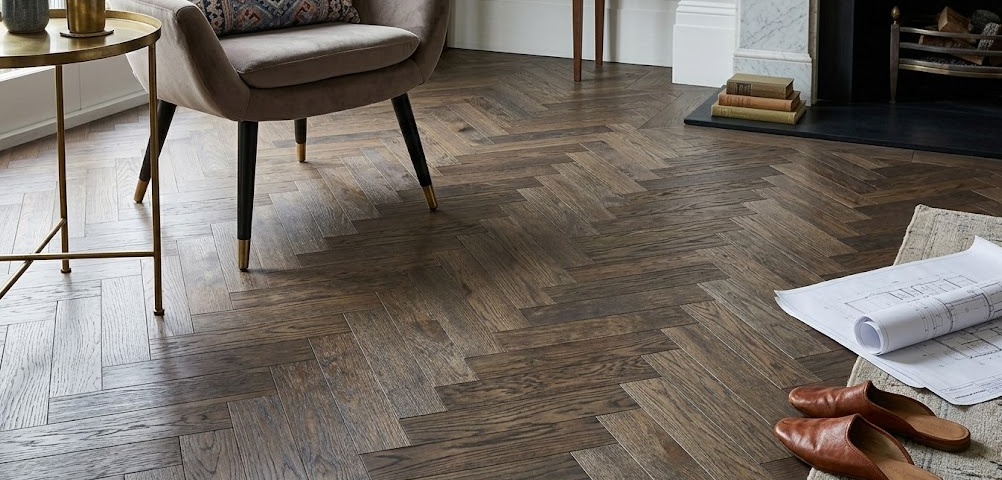
There’s something deeply satisfying about walking into a room where the floor quietly steals the show. That warm, rich, almost chocolatey depth you sometimes see in high-end homes and boutique hotels? There’s a good chance it’s smoked oak parquet — one of the most sought-after flooring choices in luxury interior design today.
Whether you’re renovating a villa in Dubai or redesigning your apartment living room, smoked oak parquet brings a timeless character to any space. In this guide, we’ll cover everything you need to know: what it is, how it’s made, why designers love it, how to maintain it, and whether it’s the right choice for your home or commercial project.
Let’s dive in.
What Is Smoked Oak Parquet? Understanding the Basics
Before we get into the aesthetics, let’s talk about what smoked oak parquet actually is — because it’s not the same as stained or painted wood.
Smoked oak is produced through a process called fuming, where solid oak timber is exposed to ammonia fumes in a sealed chamber. The ammonia reacts with the natural tannins in the oak, producing a rich, dark colour that runs deep into the grain of the wood — not just on the surface.
This is what makes smoked oak fundamentally different from dark-stained wood. With stain, the colour sits on top. With smoking, it becomes part of the wood itself.
Parquet, on the other hand, refers to the geometric pattern in which wooden blocks or strips are arranged. The classic herringbone, Versailles, basket weave, and chevron layouts all fall under the parquet family.
So when you put the two together — smoked oak + parquet — you get a flooring product that is both visually stunning and structurally authentic.
The History Behind Smoked Oak and Parquet Flooring
Parquet flooring has a rich history. It first gained popularity in 17th-century France, most famously at the Palace of Versailles, where intricate parquet floors replaced the cold marble that required an army to maintain. The technique spread across Europe and eventually became a hallmark of refined residential design.
Oak smoking, meanwhile, has roots in traditional European woodworking. Craftsmen in countries like Germany and Austria discovered that ammonia — naturally present in horse urine stored in stables — would darken adjacent oak timber over time. They eventually refined this into a deliberate process used to create consistently dark, tonal hardwood.
Today, modern manufacturing has perfected both processes, making smoked oak parquet accessible to architects, interior designers, and homeowners around the world — including across the UAE and wider Middle East.
Why Interior Designers Love Smoked Oak Parquet
If you follow interior design trends at all, you’ve noticed smoked oak appearing everywhere — from luxury residential developments to five-star hotel lobbies. There are real reasons for this.
1. Depth of Colour That Can’t Be Replicated
The ammonia-fuming process creates colour variation and depth that no stain can mimic. The grain structure of the oak becomes more pronounced, and each plank looks subtly unique. In a herringbone layout, this variation creates a visual rhythm that’s genuinely beautiful.
2. A Perfect Balance Between Warmth and Sophistication
Pure white floors can feel clinical. Very dark floors can feel heavy. Smoked oak hits a sweet spot — it’s warm, grounded, and earthy without being oppressive. It pairs exceptionally well with:
- Marble countertops and wall cladding
- Brass or brushed gold hardware
- Soft, neutral wall tones (warm whites, greiges, earthy beiges)
- Velvet and linen upholstery
3. It Works in Both Traditional and Contemporary Spaces
This is rare for a flooring material. Smoked oak parquet looks equally at home in a classic Victorian townhouse and a minimalist, open-plan modern apartment. The geometric pattern can be dialed up (Versailles layout for grandeur) or dialed down (simple brick bond for subtlety).
4. It Hides Wear Well
Lighter floors show every scratch, dust particle, and footprint. Darker tones like smoked oak are far more forgiving in high-traffic areas — which makes them genuinely practical, not just beautiful.
Types of Smoked Oak Parquet Flooring
Not all smoked oak parquet is the same. Here’s a breakdown of the main types you’ll encounter when shopping:
Solid Smoked Oak Parquet
Made from a single piece of smoked oak timber throughout. It’s the most traditional form and can be sanded and refinished multiple times over its lifespan. It’s also the most susceptible to humidity changes, so it’s not recommended for bathrooms or kitchens.
Best for: Formal living rooms, studies, bedrooms, heritage properties.
Engineered Smoked Oak Parquet
Here, a layer of real smoked oak sits on top of a multi-layered plywood or HDF core. This construction makes it more dimensionally stable, meaning it handles heat and humidity better than solid wood.
Best for: Underfloor heating systems, apartments, humid climates like Dubai.
Smoked Oak Parquet with Different Finishes
The finish applied to smoked oak significantly changes its look and feel:
| Finish Type | Appearance | Maintenance |
|---|---|---|
| Oiled | Natural, matte, enhances grain | Requires periodic re-oiling |
| Lacquered | Smooth, glossy or satin sheen | Easy to clean, less natural feel |
| Brushed | Textured, tactile, aged look | Hides scratches well |
| Unfinished | Raw wood, apply your own | Fully customisable |
For most luxury applications, brushed and oiled smoked oak parquet is the preferred choice — it looks the most natural and develops a beautiful patina over time.
Smoked Oak Parquet in Dubai: Climate Considerations
Dubai’s climate presents a unique challenge for hardwood flooring. Extreme heat, air conditioning running year-round, and relatively high humidity levels in coastal areas can all put stress on wood.
Here’s what you need to know:
Engineered construction is highly recommended for Dubai homes. The multi-layer core resists expansion and contraction far better than solid wood in temperature-controlled environments.
Acclimatisation is essential. Before installation, smoked oak parquet should be left in the installation space for at least 48–72 hours so the wood can adjust to the local temperature and humidity.
Underfloor heating compatibility is a key selling point of engineered smoked oak parquet. Dubai properties increasingly use underfloor heating, and engineered boards handle this far more reliably than solid wood.
UV exposure is another consideration. Prolonged direct sunlight will gradually lighten the surface of smoked oak, so consider window treatments or UV-filtering glass in sun-facing rooms.
At interiordesign-dubai.ae, our team regularly specifies smoked oak parquet for high-end residential and commercial projects across Dubai, and we always account for these local climate factors during the planning stage.
Popular Parquet Patterns for Smoked Oak
The pattern you choose changes everything. Here are the most popular options:
Herringbone
The most iconic parquet layout. Rectangular blocks are arranged at 45° or 90° angles to form a V-shaped zigzag. It’s classic, elegant, and works in both large and small spaces. On smoked oak, the directional grain of the herringbone creates a striking visual texture.
Chevron
Similar to herringbone, but with angled cuts so the points meet precisely in the centre. It looks sharper and more contemporary. Chevron smoked oak parquet is particularly popular in open-plan luxury apartments.
Versailles
A large-format, square panel design with intricate geometric inlays. Used in formal rooms, entranceways, and high-end hospitality spaces. Requires skilled installation and a larger budget — but the result is extraordinary.
Basket Weave
Alternating pairs of planks create a woven, textile-like appearance. More unusual and artistic — a great choice if you want something that stands out.
Installation: What to Expect
Installing smoked oak parquet isn’t a weekend DIY project. It requires skilled craftspeople, the right tools, and careful preparation. Here’s a general overview of the process:
Step 1: Subfloor preparation The subfloor must be clean, level, and dry. Any unevenness greater than 3mm over 2 metres will need to be corrected before laying begins.
Step 2: Acclimatisation The boards are brought into the space and left for 48–72 hours. This prevents expansion or contraction after installation.
Step 3: Layout planning The installer maps out the pattern, identifying the centre point of the room and working outward. This ensures symmetry and minimises awkward cuts at the edges.
Step 4: Adhesive or floating Solid parquet is typically glued down. Engineered parquet can be glued, nailed (for tongue-and-groove), or floated on underlay. The method depends on the subfloor type and the product specification.
Step 5: Finishing If the boards are pre-finished, the floor is cleaned and a final inspection carried out. If unfinished boards are used, sanding, staining (if required), and oiling or lacquering happens on-site.
Expect the process to take 2–5 days depending on room size and pattern complexity.
Pros and Cons of Smoked Oak Parquet
Pros
- Authentic colour — deep, rich tones that can’t be replicated by surface treatments
- Long lifespan — solid boards can last 50–100 years with proper care
- Increases property value — hardwood parquet floors are consistently cited as a premium feature by real estate professionals
- Unique appearance — each plank is subtly different, creating a floor that feels bespoke
- Refinishable — solid boards can be sanded and re-oiled multiple times
Cons
- Higher upfront cost — premium hardwood flooring requires a meaningful investment
- Requires skilled installation — mistakes in pattern alignment or subfloor preparation are costly to fix
- Sensitivity to moisture — solid smoked oak must be kept away from wet areas
- Maintenance commitment — oiled finishes need periodic re-application (typically every 1–3 years depending on traffic)
How to Maintain Smoked Oak Parquet Flooring
Good maintenance keeps smoked oak parquet looking beautiful for decades. Here are the essentials:
Daily care:
- Sweep or vacuum regularly using a soft brush attachment (not a beater bar, which can scratch the surface)
- Wipe up spills immediately — water left standing can cause staining or swelling
Weekly cleaning:
- Use a barely damp mop with a pH-neutral wood floor cleaner
- Never use steam mops, harsh chemicals, or excessive water
Periodic maintenance:
- Oiled floors should be re-oiled every 12–36 months depending on wear
- Use the same brand of oil as the original finish for best results
- Place felt pads under furniture legs to prevent scratching
- Use entrance mats to reduce grit and dirt from being tracked across the surface
Long-term care:
- Solid smoked oak parquet can be sanded down and refinished when it eventually shows significant wear — typically every 15–25 years under normal residential use
Cost Guide: What to Budget for Smoked Oak Parquet in Dubai
Pricing varies based on product quality, pattern complexity, and installation requirements. Here’s a general guide:
| Category | Approx. Cost (AED per m²) |
|---|---|
| Mid-range engineered smoked oak | AED 180–280 |
| Premium engineered smoked oak | AED 300–500 |
| Solid smoked oak parquet | AED 400–700+ |
| Installation (herringbone/chevron) | AED 60–120 |
| Underlay and adhesive | AED 15–40 |
Note: Prices are approximate and vary based on supplier, specification, and project scope. Always obtain detailed quotes from reputable suppliers.
Frequently Asked Questions (FAQs)
Is smoked oak parquet suitable for underfloor heating?
Yes — engineered smoked oak parquet is specifically designed to work with underfloor heating systems. The multi-layer construction handles temperature fluctuations without warping or gapping. Always check the manufacturer’s specifications for maximum temperature tolerances.
How is smoked oak different from dark-stained oak?
Smoked oak gets its colour from a chemical reaction between ammonia fumes and the wood’s natural tannins — this colour penetrates deep into the wood. Stained oak has colour applied to the surface only. Smoked oak therefore shows more natural grain variation and depth, and the colour is more stable over time.
Can smoked oak parquet be installed in kitchens?
It’s not ideal. Kitchens expose flooring to regular water and spills. If you want hardwood in a kitchen, engineered smoked oak with a lacquered finish is more resistant than oiled solid boards — but you’ll still need to manage spills quickly.
How long does smoked oak parquet last?
With proper care, solid smoked oak parquet can last 50–100 years. Engineered boards typically have a lifespan of 25–40 years depending on the wear layer thickness and maintenance routine.
What interior styles suit smoked oak parquet best?
Smoked oak parquet works beautifully in contemporary luxury, Scandinavian-influenced design, industrial chic, and traditional European interiors. Its warm, dark tones complement neutral and earthy colour palettes particularly well.
Is smoked oak parquet hard to clean?
Not at all — it’s actually one of the easier hardwood floors to maintain because the dark tones hide dust and minor marks. Regular sweeping and occasional damp mopping with a suitable cleaner is all that’s needed.
Conclusion
Smoked oak parquet is one of those flooring choices that genuinely stands the test of time — not just in durability, but in style. Its rich, authentic tones, the natural depth created by the fuming process, and the timeless geometry of parquet patterns combine to create a floor that adds real character and value to any space.
Whether you’re fitting out a new villa, upgrading a Dubai apartment, or designing a commercial interior that needs to impress from the ground up, smoked oak parquet deserves serious consideration. The investment is real — but so is the return, both in everyday enjoyment and in the long-term value it adds to your property.
If you’re ready to explore smoked oak parquet for your next project, the team at interiordesign-dubai.ae can guide you from material selection through to installation, ensuring the result is everything you’re imagining — and more.